
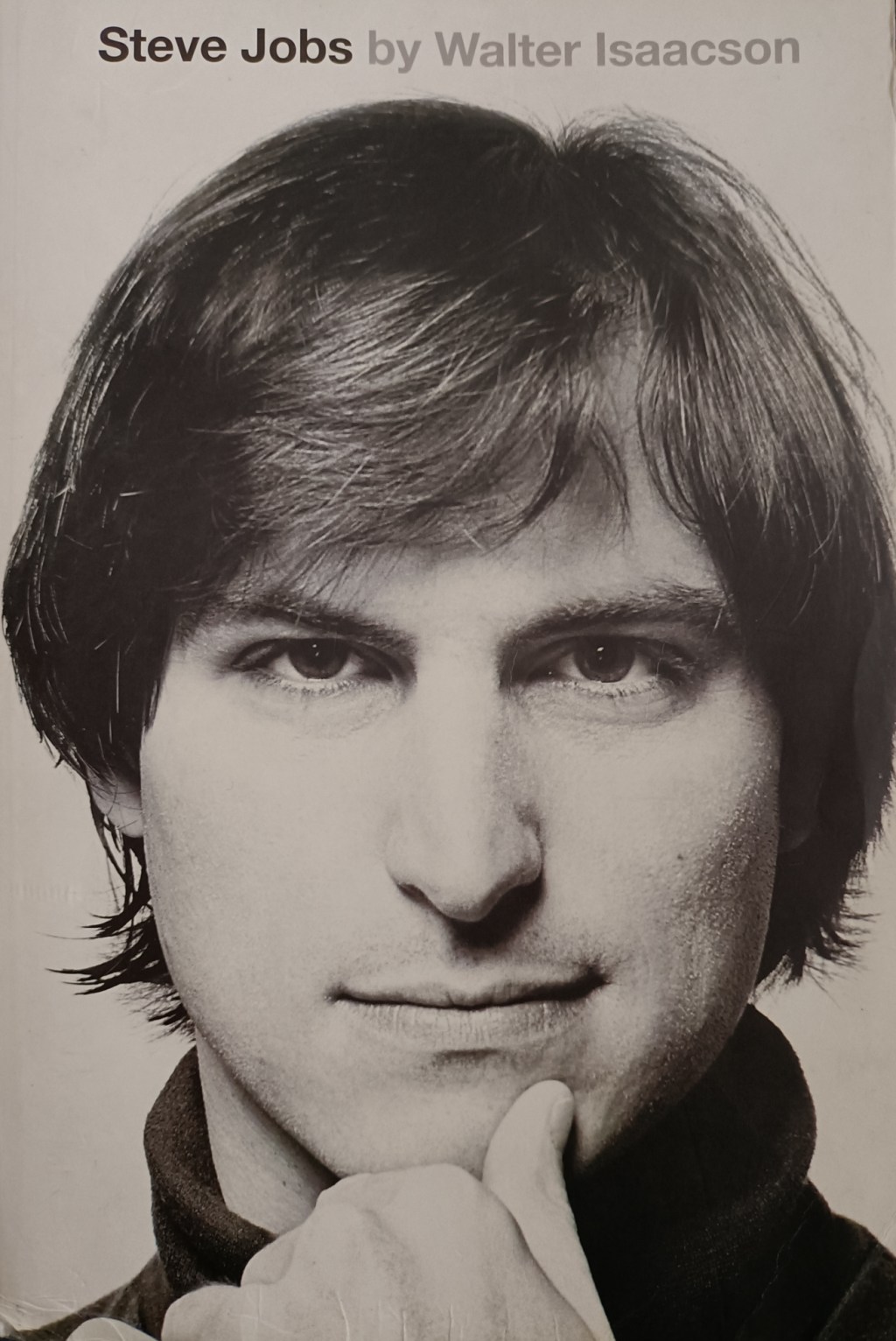
by Walter Isaacson
Apart from learning that the colour beige has 200 shades, along with other weird and wonderful facts, this book has showcased the good, the bad and the ugly of a great technological pioneer.
In a world currently plagued by symbolic stagnation and equal dynamic innovation, it’s comforting to have a brief escape to the past, to discover the humble beginnings of an incredibly successful international technology company.
Isaacson proves a compelling storyteller, his narrative so smooth as to allow the life of Jobs to seep through the pages unhindered by any subjectivity. Jobs himself wanted to make sure that the aspects of his life were not glossed over and sugarcoated. It’s as though he wanted the narrative to be as authentic and brutally honest as himself. With a tale as brilliantly told as this, it would be hard to imagine Jobs’ life being conveyed in any other fashion. The duality to his personality makes everything all the more real, all the more raw. A rawness in the background that allowed simplicity to manifest in Apple‘s products.
Knowing the care and detail that went into these products, it makes a lot more sense why those here in Australia are so stereotypically inclined to purchase their products, despite alternative, often cheaper options available.
The legacy Jobs’ left behind encompasses more than what occurred at Apple. Perhaps this is my age showing, but I was not aware that he founded Pixar. To re-establish oneself at the age of thirty to go on to found another, wonderfully successful company is so admirable. I do not yet know anyone personally who has founded a successful company, and very few who have started small business ventures. Perhaps that is yet another thing lacking in this day and age. We seem to exist in a smaller realm of possibility, far different than the one Jobs was able to cultivate.
This book captivated me and moved me to tears with the final pages. A truly fantastic read.
I will leave you, dear reader with a comforting excerpt from the book. A mantra if you will. One that I now endeavour to embody.
One of the first things Jobs did during the product review process was ban PowerPoints. “I hate the way people use slide presentations instead of thinking,” Jobs later recalled. “People would confront a problem by creating a presentation. I wanted them to engage, to hash things out at the table, rather than show a bunch of slides. People who know what they’re talking about don’t need Powerpoint.”
 Word Hunger
Leave a comment