All the decorum and propriety that was held in my last post shall be thrown out the window for this review, because a damn good rant is needed. I have now also come to the realisation that to write a blog post about a book I didn’t wholeheartedly enjoy is irking.
My mother, in fact, read this book before I did and the outcome looked bleak. All she could say was less than positive things about the book, so much so that I did not want to read it. When we happened upon the trailer for a movie, I could not resist the enticing pull of this book.
Overall, I quite enjoyed it. That is, until its predictable, dreadful, and depressing finish. This book reminds me vaguely of Austen. In a post-war society, there is not much money to go around and therefore the narrative follows mundane events which are fleshed out to the max. Dinners, walks, drives and the odd dance. This book is centred so brilliantly around its vividly expressed setting, that it is hard to imagine how the movie is to play out without this crucial essence. I shall have to watch to see.
Spoilers will follow, be warned Hungry Readers
P.S. Trigger warning: the following may contain mentions of mental health issues such as depression and PTSD
We reach far past the halfway mark and I have no complaints. I am thoroughly enjoying the book. The plot is very easy to follow, the descriptions of the settings add to the very intimate feel of the narrative. The small number of characters adds to the ease of the reading journey. I would recommend this book to those trying to get back into reading, if only it didn’t have such a terrible ending.
The first part of the book that stood out was the level of humanity and thought put into the dog’s character. I thought that was rather refreshing, although it turned out that the dog did not play a crucial role in the book, but rather was a foreshadowing of the dreadful things to come.
Let’s talk about Roderick: he was the first to be truly affected by the ghost and yet ended up as the only one in the family to not die. I feel as though we didn’t receive enough closure regrading his mental state. Just use him, commit him to a mental asylum and then never really bother with him again. He’ll never recover, that’s just his reality.
When he first started to be affected by the entity, I was reading and thought “Hm, the ghost is probably a symbol of his PTSD and depression.” I hosed myself when Dr. Faraday turned out to be a sane human being and identified that Roderick had mental health issues. A very big “Aha!” moment. Of course he would come to that conclusion, he’s a doctor! Silly me to get caught up in the drama.
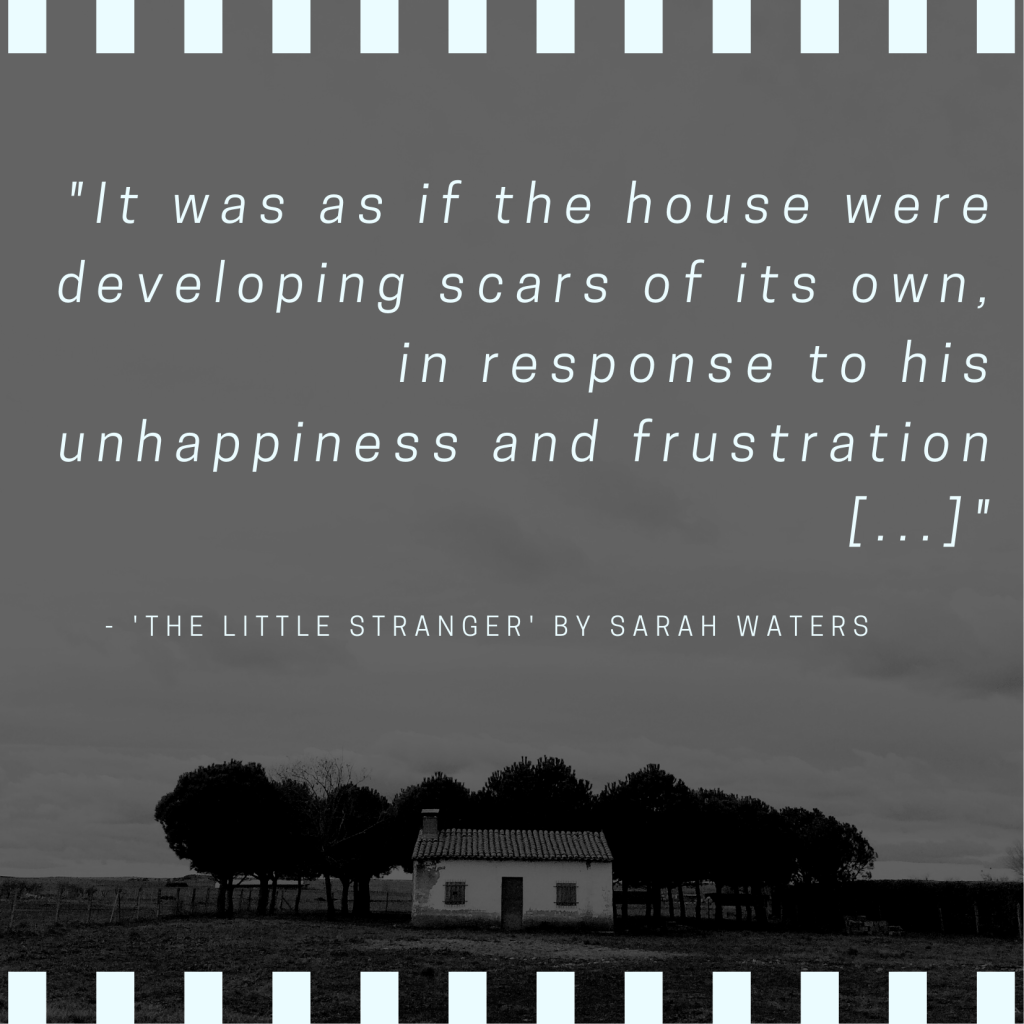
The ghost itself was rather well thought out, in my opinion. So much potential and such a perfect back story. It made sense. The ghost never got more fleshed out after Mrs. Ayres death. I thought it was very confusing that it just suddenly appeared, and wasn’t roaming the house long before its debut in the narrative.
The closer I got to the ending, I thought to myself, “This is going to be one of those books where everyone dies.” Yup. It was a bit of an easy way out for Waters that Dr. Faraday emerged from this tale unharmed by the ghost. Unless it took the view that killing his beloved was torture enough.
Regardless of its ending, this book proved a good distraction from my own daily existence.
Images created using Canva
Use the link below to get a sign-up bonus!
 Word Hunger
Leave a comment